Accent Softening
She or See – An Accent Tip for Greek Speakers of English
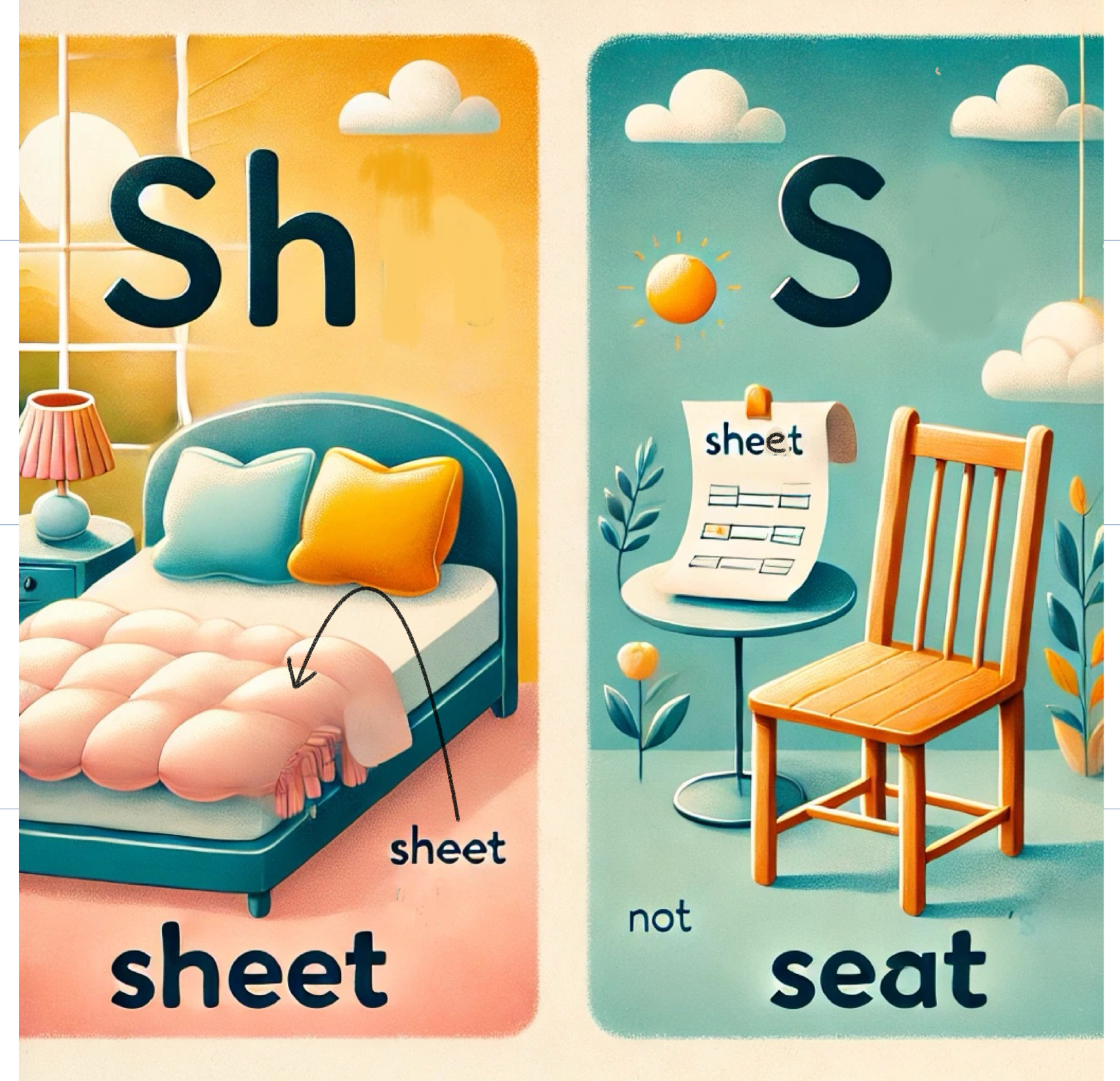
The “sh” and “s” mix-up among Greek speakers — particularly when speaking English or other foreign languages — stems from phonological differences between the Greek language and others, such as English.
In my experience working with many Greek professionals, this mix-up has been one of the biggest obstacles for them. For example, I have a Greek Client who is a surgeon, and she needs to differentiate between a “MESH” and a “MESS“. As you can imagine, these are vital differences she must get right. In most situations, it’s not a case of sounding British or having Queen’s English, but rather being clearly understood. One of my most important principles in accent work is that *firstly* the basic and most commonly used words ( in that client’s profession) be clearly understood.
Here’s a detailed explanation:
Greek Phonology and the “sh” Sound
- No “sh” Sound in Standard Modern Greek:
Modern Greek does not have a native /ʃ/ sound (the “sh” sound, as in “shoe”). Instead, it uses the /s/ sound, as in “see,” which is more common and serves a broader range of phonetic roles. - Substitution of /s/ for /ʃ/:
When Greek speakers encounter words in English or other languages with the “sh” sound, they often substitute it with the /s/ sound. For example:- “She” may be pronounced as “see.”
- “Shop” may become “sop.”
- Influence of Native Language Rules:
Greek speakers have difficulty distinguishing /s/ and /ʃ/ because their native language lacks the distinction. This leads to a simplification when learning or speaking other languages.
Historical and Dialectal Variations
- Ancient Greek Influence:
Ancient Greek also lacked the “sh” sound, and this absence carried into Modern Greek. Other Indo-European languages, however, retained or developed the /ʃ/ sound, which creates a notable difference. - Regional Greek Dialects:
Some Greek dialects or regional accents may exhibit subtle phonetic influences, but the standard Modern Greek generally avoids sounds like /ʃ/.
Implications for Language Learning
- Challenges for Greek Speakers Learning English:
- Greek speakers must consciously learn to produce and perceive the /ʃ/ sound.
- Distinguishing between minimal pairs like “see” and “she” or “sip” and “ship” can be particularly challenging.
- Common Misunderstandings:
This mix-up can lead to misunderstandings in conversation, especially in cases where the difference between /s/ and /ʃ/ is meaningful.
Strategies to Overcome the Mix-Up
- Practice Listening and Repetition:
Listening exercises focusing on the /ʃ/ sound can help Greek speakers attune to the difference. - Phonetic Training:
Speech coaches often use visual aids and diagrams to help learners understand tongue placement and airflow for the “sh” sound. - Minimal Pair Drills:
Practicing word pairs like “sip” vs. “ship” or “sea” vs. “she” can help reinforce the distinction.
While this phonological mix-up is a common challenge, it is by no means insurmountable. With focused effort, Greek speakers can master the “sh” sound and improve their pronunciation in English.